
Publikationen
Special Series: North Africa in Focus
Gemeinsame Publikationsreihe von Middle East Minds und dem "North Africa, the Mediterranean and the Sahel Program" des Stimson Centers, Washington.
Part 2: Gateways to the South
by
Pauline Raabe
Maritime Power and North Africa's Reach into Sub-Saharan Africa
September 24, 2026
African trade is outward-looking. Only 15 percent of commerce stays on the continent, in stark contrast to its European (~70%) and Asian (~60%) neighbours. The African Continental Free Trade Area (AfCFTA), founded in 2018, aspires to change that. As most of African trade is seaborne, the ports of North Africa hold a strategic position, connecting global trade flows on the East-West corridor, as well as the Atlantic and the Red Sea to the Sub-Saharan interior. Morocco and Egypt have both begun to expand maritime infrastructure and economic influence geared towards Sub-Saharan Africa, while applying two different approaches that illustrate their strategic objectives.
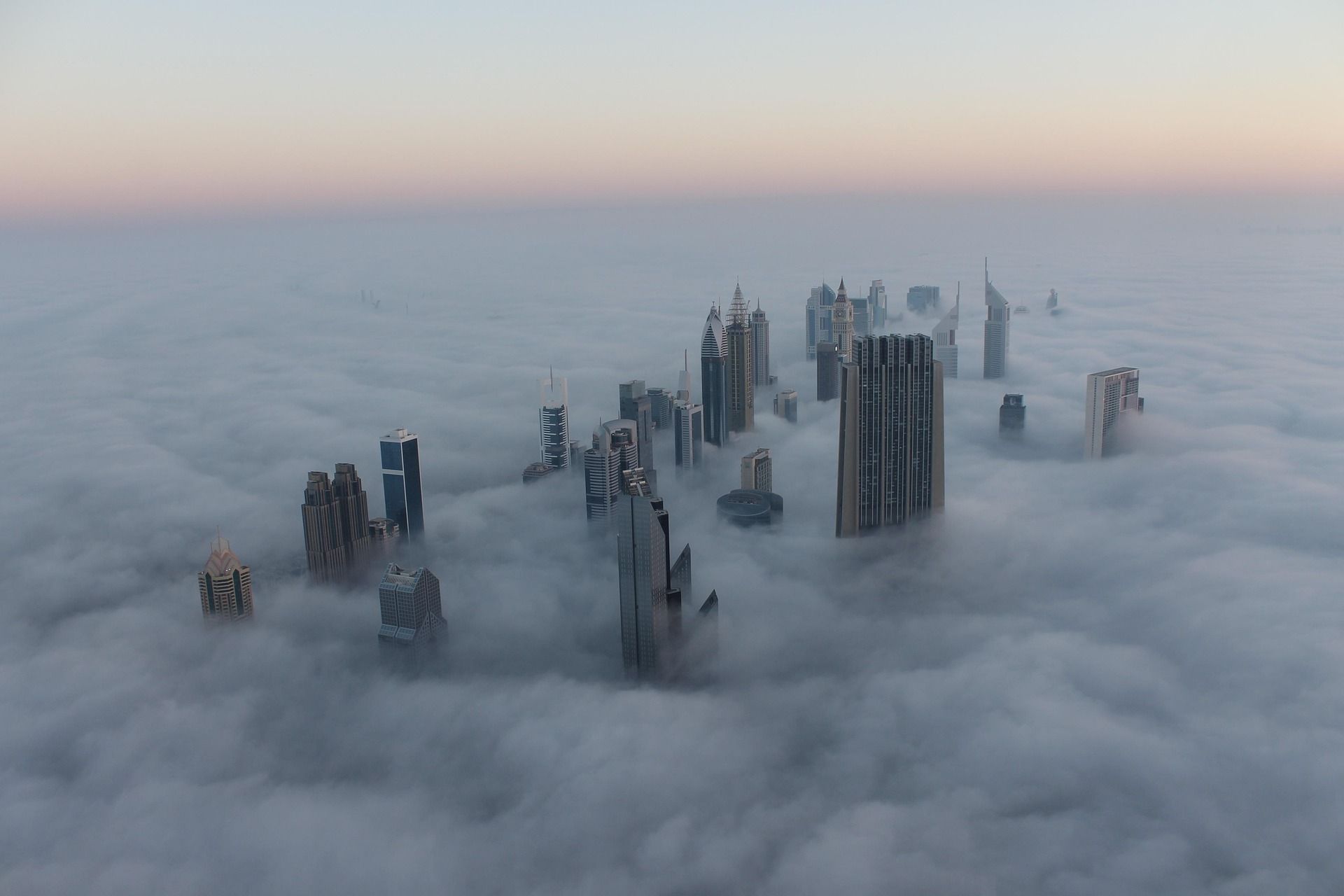
In short, the emerging trend to turn south does not equal economic integration. For both countries, Sub-Saharan Africa remains a small share of trade compared to commerce with Europe. The relationship between connectivity and cooperation proves less linear than it first appears. Instead, maritime trade hubs reflect unilateral political and economic ambitions, as illustrated by Dubai Port and the growing global influence of the Emirati logistics company DP World. While Morocco prioritizes investment and corridor-building on the Atlantic, Egypt asserts influence via the Suez Canal, a globally significant chokepoint on the Red Sea. Both examples show how maritime and infrastructure assets are turned into political influence and economic leverage.
Morocco’s Atlantic Strategy
Morocco's flagship, Tanger Med, is Africa's largest container port, handling more than eleven million containers in 2025 and ranking 17th among ports worldwide. Crucially, these numbers underpin the port's role as a global east–west transshipment hub for international shipping lines, with hardly any volumes moving southwards. Tanger Med positions itself as a gateway between continents while its subsidiary Marsa Maroc has entered strategic partnerships with Port of Cotonou in Benin on the west coast and Port of Djibouti on the east coast of Africa.
Since rejoining the African Union in 2017, Morocco has expanded its economic activities on the continent. The African Development Bank's 2025 Industrialisation Index ranks Morocco as the continent's leading industrial economy, narrowly ahead of South Africa for the first time. Moroccan companies such as Attijariwafa Bank and Maroc Telecom operate across dozens of African markets and Casablanca-based OCP Group, the world’s largest phosphate-based producer of fertilisers, provides around half of the continent’s fertilizer supply. Rabat has recently bundled these engagements into an explicit corridor diplomacy: the 2023 Atlantic Initiative offers the landlocked Sahel states maritime access through Moroccan ports, while the African Atlantic Gas Pipeline with an estimated investment volume of 25 billion dollars aims to connect Nigeria and Morocco via West African coastal countries within the next three decades.
Morocco’s goals go beyond economic cooperation with its coastal neighbours. The pipeline project contributes to Morocco's campaign for recognition of its sovereignty over Western Sahara. The showcase Dakhla port, to be opened in 2029, lies in disputed territory. Moreover, the infrastructure offensive challenges the rival Trans-Saharan pipeline by Algeria. While the latter is under construction, the Moroccan pipeline remains an aspiration still in the planning stage.
The Atlantic Initiative aims to widen Rabat’s influence in the Sahel and Sub-Saharan neighbourhood. While several West African countries have welcomed the Initiative, some stay cautious: Mauritania, whose territory the pipeline must cross and whose own ports at Nouakchott and Nouadhibou would compete with a Moroccan-run Dakhla port, stressed the country’s "positive neutrality" between Rabat and Algiers. To keep diplomatic doors open to the two rivals, Nouackchott engages in the project without considering it a backbone of its strategy. In effect, the planned connections from and to Morocco via pipeline and ports lay the groundwork for future trade flows - an investment in, or some would say a bet on, the economic growth of the continent.
Egypt and the Red Sea
Egypt's maritime weight rests on the Suez Canal as a transit corridor that captures around 12 per cent of world trade in peaceful times. The Egyptian government controls the passage and collects charges from ships. Similar to Morocco’s Tanger Med, Port Said acts as transshipment port for goods moving between Asian production and European demand with little turning southwards. Around it, the Suez Canal Economic Zone courts manufacturing for African, Arab and European markets. But Egypt's genuine continental channel runs through COMESA, the Common Market for Eastern and Southern Africa. Despite Cairo's institutional weight — leading exporter in the bloc, host of Afreximbank and the pan-African payments system — Egypt still sent just under 8 billion dollars, roughly 15 per cent of its exports, to the rest of the continent in 2025.
Cairo’s investment in the port of Djibouti exemplifies how ownership of maritime infrastructure assets and political leverage go hand in hand. Egyptian developers are building a new terminal, a logistics hub and a solar plant to power the Doraleh container terminal complex through which more than 90 per cent of Ethiopia's trade passes. Ethiopia ranks second in COMESA with regards to GDP and FDI and counts as Cairo’s geopolitical rival due to disputes over water access and diverging regional alliances. Even as trade between Egypt and Djibouti was declining, the two governments signed port and energy accords, asserting that strategic objectives surpass economic integration. Alongside parallel ties to Eritrea and Somalia, Egypt aims to dominate access to the Red Sea and pressure Addis Ababa amid the dispute over the Grand Ethiopian Renaissance Dam that impacts Egypt’s water supply.
This case shows how maritime engagement and geopolitical rivalry become intertwined and cooperation with one state means leverage over another. Given that China's only overseas military base and Gulf-financed ports are located along the same coast, several powers are competing on controlling the passage. On top of it, leverage within the slim trade corridor is vulnerable: when Houthi attacks closed access to the Red Sea from late 2023, traffic via the Suez Canal and Bab el-Mandeb had halved by early 2024, halting not only global trade but also Egypt’s levies and putting its model into question. A chokepoint that concentrates power results in high exposure as well.
Egypt and Morocco: Two different strategies with a similar goal
Morocco and Egypt both aim to convert maritime assets into political influence, but they have chosen different pathways that mirror their respective strengths and strategy. Morocco's Atlantic model is investment-led and based on infrastructure corridors to support political goals. Egypt's Red Sea model is geographically concentrated, throughput-based and driven by leverage over regional rivals.
In both cases, the port serves as a state vehicle rather than an autonomous commercial actor, reflecting the capitals’ power structure and priorities: Tanger Med is run at arm's length through a corporatised agency that executes strategies set in Rabat, whereas Egypt's canal and ports are administered directly by sovereign authorities under presidential and military control. Morocco's reach tends towards co-development while Egypt cements asymmetric dependence.
Infrastructure, such as ports or pipelines, do not exist in a void but incorporate political realities that shape their operations, may it be through access rights, transit terms or ownership. Regional trade institutions like AfCFTA, ECOWAS or COMESA are designed to foster trade within the African continent, including the vital North-South corridor, but they are subject to fragmentation and are forced to succumb to national agendas and regional rivalries. For now, North African power projection runs on bilateral corridor-building far more than on institutional codification or sustained trade relations.
To conclude, political ties determine trade and maritime connectivity, infrastructure can entrench rivalry as readily as partnership, and the regional conflict in the Red Sea minimised Egypt’s passage levies overnight. What is emerging along Africa's northern coasts is therefore less an integration of the continent than its two most capable northern states projecting power southward. However, given the dynamic interplay of business and politics, it remains to be seen how the aspirations of today will be shaped by the political realities and trade flows of tomorrow.
Editor’s Note:
Stefan Lukas is founder and Chief Executive Officer (CEO) of Middle East Minds. He is also a guest lecturer at the German Armed Forces Command and Staff College in Hamburg.
Yusuf Can is a Research Associate with the North Africa, Mediterranean, and the Sahel Program at the Stimson Center. Before joining Stimson, he worked as an Analyst and Coordinator with the Middle East Program at the Wilson Center.
Part 1: The Game of Middle Powers in North Africa
by
Stefan Lukas and
Yusuf Can
How Russia, the Gulf states, and Turkey are reshaping North Africa through security partnerships, investment, and political influence
June 15, 2026
In recent years, North Africa has increasingly become an arena of geopolitical competition in which global and regional middle powers are expanding their influence not through open confrontation, but through a dense network of economic investments, security cooperation, and political alliances. While European states and China continue to serve as central economic anchors in both trade and infrastructure projects, the security policy dynamic is increasingly shifting in favor of other external actors who operate more flexibly and are often less bound by norms. The European Union remains the most important trading partner for many states in the region, accounting for over 30% of the foreign trade of countries such as Morocco or Tunisia, while China continues to expand its presence through infrastructure investments under the Belt and Road Initiative.
At the same time, however, it is evident that Russia as well as the Gulf states, above all the United Arab Emirates (UAE) and Saudi Arabia, have significantly expanded their political and security influence, especially in countries such as Libya, Egypt, and Sudan. In doing so, these actors follow a different strategic logic than traditional Western partners by specifically combining economic instruments with security support, arms deliveries, and the promotion of specific political actors. North Africa is thus no longer merely a peripheral area of European neighborhood policy, but a contested geopolitical space in which middle powers are actively seeking to shape political orders and power relations.
Russia and the Gulf States
In the last decade, Russia has reestablished itself as a key security actor in North Africa, deliberately exploiting existing instabilities to gain political influence with relatively few resources while positioning itself as an alternative to Western partners. This is particularly evident in Libya, where pro-Russian forces — especially the Wagner Group and its successor the Africa Corps — have played a significant role since 2019 by providing military support to eastern actors while securing strategically important infrastructure such as oil facilities and military bases. According to United Nations estimates, several thousand Russian fighters were present in the country at times. A concrete example of this cooperation is the support supplied to the Libyan National Army (LNA) under Khalifa Haftar, in which Russian actors not only provided military expertise but also secured logistical support and access to air bases such as al-Jufra, thereby enabling Russia to gain direct influence over military operations and control of key territories.
In addition, Russia has expanded its presence in Sudan, where it has been seeking access to a naval base on the Red Sea for years, a move that would significantly extend its operational reach between the Mediterranean and the Indian Ocean. These efforts are part of a broader strategy to secure strategic hubs along key trade and military routes. At the same time, Algeria remains a key partner for Russia in the region, particularly in the military sphere: According to data from the Stockholm International Peace Research Institute, approximately 70-80% of Algeria’s military equipment comes from Russia, underscoring the close security ties between the two countries.
In addition to Russia, the Gulf states, particularly the UAE and Saudi Arabia, have emerged as influential actors in North Africa, strategically linking their economic strength with political and, in some cases, military engagement. The UAE has played an active role in Libya in particular by providing financial, logistical, and military support to forces based in eastern Libya, which has had a significant impact on the balance of power on the ground. This included the delivery of drones and the construction of military infrastructure to support Haftar, through which the UAE has directly intervened in the military dynamics of the conflict. At the same time, the UAE is systematically expanding its economic presence, for example, through investments in ports, logistics, and energy infrastructure, thereby enabling economic influence to be directly translated into political influence. Emirati companies are increasingly involved in port projects in Egypt and Morocco to secure long-term logistical hubs.
By comparison, Saudi Arabia takes a more cautious approach to military matters in North Africa, but has gained considerable influence, particularly through financial support, especially in Egypt, whose economic stability has depended heavily on aid from the Gulf states since 2013. According to the International Monetary Fund, the Gulf states have supported Egypt in recent years with tens of billions of dollars in the form of loans, deposits, and investments. A concrete example is Saudi Arabia’s repeated provision of central bank deposits and investment commitments, for instance as part of agreements to stabilize the Egyptian currency and finance major infrastructure projects. These support measures have enabled Riyadh to exert considerable influence over Cairo’s economic policy direction.
Turkey and its North Africa Ambitions
Turkey has emerged as one of the most consequential middle powers in North Africa, leveraging a distinct combination of military engagement, arms exports, economic investment, and energy deals. Unlike Russia or the Gulf states, Turkey operates under a nominally institutional framework and a NATO membership that theoretically constrains its behavior. Yet in practice, Ankara has demonstrated a willingness to act unilaterally and transactionally, which places it closer to the flexible-partner model than to Western institutional norms. Like Russia and the Gulf states, Turkey operates with significantly greater flexibility and fewer political constraints than European actors, which has made it an appealing partner for governments and factions seeking support without the conditions typically attached to European engagement.
One of Turkey’s most direct and consequential engagements in North Africa has been in Libya. Beginning in late 2019, Ankara has intervened militarily on behalf of the Tripoli-based Government of National Accord (GNA), deploying proxy fighters, naval assets, air defense systems, and Bayraktar TB2 drones that proved decisive in halting the Haftar offensive and reshaping the battlefield balance of power. This intervention was formalized through a bilateral security and military cooperation memorandum, which also included a controversial maritime delimitation agreement establishing overlapping exclusive economic zones in the Eastern Mediterranean, a move with significant implications for energy rights that directly antagonized Greece, Cyprus, and Egypt. Turkey’s military footprint in Libya has since become entrenched, with Ankara maintaining a presence at the Watiyya air base and the Misrata naval base, providing ongoing training, equipment transfers, and logistical support to aligned forces. The drone component of this engagement is particularly notable: TB2s have become a signature Turkish export and a tool of strategic signaling across multiple theaters, and their deployment in Libya served simultaneously as a battlefield asset and a marketing instrument for Turkey’s emerging defense industry.
In the arms and defense sector more broadly, Turkey has actively cultivated bilateral relationships across North Africa. Armored vehicles, drones, and light weapons manufactured by Turkish defense firms including Baykar, FNSS, and BMC have found buyers in the region. Ankara has pursued defense cooperation frameworks with several governments as part of a broader effort to position itself as an alternative arms supplier to countries seeking to reduce their dependence on Western or Russian systems. These arrangements are rarely purely commercial, as they typically come bundled with military training agreements, joint exercises, and the embedding of Turkish advisers, creating ongoing institutional relationships that translate into sustained political influence.
On the energy front, Turkey’s interests in North Africa are substantial and strategic. The maritime delimitation agreement with Libya’s GNA was designed, in part, to secure Turkish access to potential hydrocarbon exploration zones in the Eastern Mediterranean, a region of intense competition among Greece, Egypt, Israel, and Cyprus. Turkish energy companies have also shown interest in infrastructure projects tied to Libya’s oil sector, and Ankara has sought to position itself as a transit and processing hub for energy flows from North Africa and the Mediterranean toward European markets. This energy dimension intersects directly with Turkey’s broader ambition to become an energy corridor state, a role that gives it leverage both regionally and in its negotiations with the European Union, especially in the context of the Russian invasion of Ukraine and the Iran war.
Turkey’s economic and commercial presence extends beyond the security and energy sectors. Turkish construction companies are among the most active in the region and have a long history of large-scale infrastructure projects across North Africa, including roads, hospitals, airports, and housing developments. In Libya alone, Turkish firms had accumulated billions of dollars in contracts prior to the 2011 conflict, many of which Ankara has sought to recover and expand as part of its post-intervention economic positioning. Turkish trade with North African states has grown steadily, and the country has pursued free trade agreements and preferential economic arrangements to deepen commercial ties. In Egypt, despite a prolonged period of hostile relations following the 2013 coup that removed the Muslim Brotherhood-aligned government Turkey had supported, Ankara has executed a pragmatic rapprochement since 2021, restoring diplomatic ties and relaunching economic engagement as strategic interests converged on issues ranging from Eastern Mediterranean gas to regional stabilization.
Soft power constitutes a further dimension of Turkish strategy. The Turkish Cooperation and Coordination Agency (TIKA) operates across the region, funding development projects, cultural centers, and humanitarian assistance that cultivate goodwill and visibility. The state broadcaster TRT Arabic and other Turkish media outlets reach substantial North African audiences. The Diyanet, Turkey’s religious affairs directorate, has invested in mosque construction and religious education across the region, partly as a counterweight to Gulf-funded religious influence and partly as a constituency-building exercise among populations where shared Sunni Muslim identity carries political resonance. These instruments are less coercive than military or economic leverage but contribute to an image of Turkey as an engaged, culturally proximate partner that can offer an alternative to both Western conditionality and Gulf transactionalism.
Conclusion
The transformation of North Africa into a contested arena of middle power competition reflects a broader restructuring of the international order in which the capacity to project influence no longer belongs exclusively to a handful of global powers. Russia, the Gulf states, and Turkey, as well as others, each approach the region with distinct instruments and motivations, yet share a common strategic logic: the willingness to engage transactionally, to combine economic, security, and political tools without the normative constraints that define Western and especially European partnership models, and to treat North African governments and factions as leverage points in broader regional and global contests. Russia prioritizes military access and anti-Western positioning; the Gulf states deploy financial power to shape governance outcomes and protect dynastic interests; Turkey pursues a more expansive agenda that includes energy rights, defense exports, commercial contracts, and ideological influence, all underwritten by hard military power in the Libyan case.
What these actors collectively produce is a more fragmented, competitive, and in some respects, more permissive environment for North African governments. Local elites have acquired new sources of arms, finance, and diplomatic cover, reducing their dependence on any single external partner, including Europe and the United States. This structural shift has real consequences for Western interests. European governments, which retain deep economic ties with the region and bear the most direct exposure to the security and migration dynamics that instability generates, increasingly find that their leverage is diluted by the availability of alternative partners who ask fewer questions and move faster. The result is not the displacement of Western influence, but its dilution. The EU and the United States remain important actors, but they now operate in an environment where their preferred tools, such as conditionality, institutional frameworks, and normative pressure, compete against actors for whom these constraints do not apply.
For North Africa itself, the proliferation of external actors carries ambiguous consequences. Greater external competition can generate resources and infrastructure that would not otherwise materialize, and it can give governments bargaining room to resist the most intrusive forms of external conditionality. But it also fuels conflict, as Libya most clearly illustrates, where competing external patrons have prolonged and deepened a civil war that might otherwise have reached a resolution. It can also entrench governance arrangements that serve external sponsors and local elites at the expense of broader populations. The game of middle powers in North Africa is ultimately not played for the benefit of North Africans – it is played for influence, access, and advantage in contests whose stakes extend far beyond the region’s borders.
Editor’s Note:
Stefan Lukas is founder and Chief Executive Officer (CEO) of Middle East Minds. He is also a guest lecturer at the German Armed Forces Command and Staff College in Hamburg.
Yusuf Can is a Research Associate with the North Africa, Mediterranean, and the Sahel Program at the Stimson Center. Before joining Stimson, he worked as an Analyst and Coordinator with the Middle East Program at the Wilson Center.
Übersicht
Der Nahe Osten in einer globalisierten Welt
Monographie mit Übersichtkapiteln zu aktuellen Entwicklungen und Herausforderungen in der Region
Matteo Scianna & Stefan Lukas, Campus-Verlag 2024
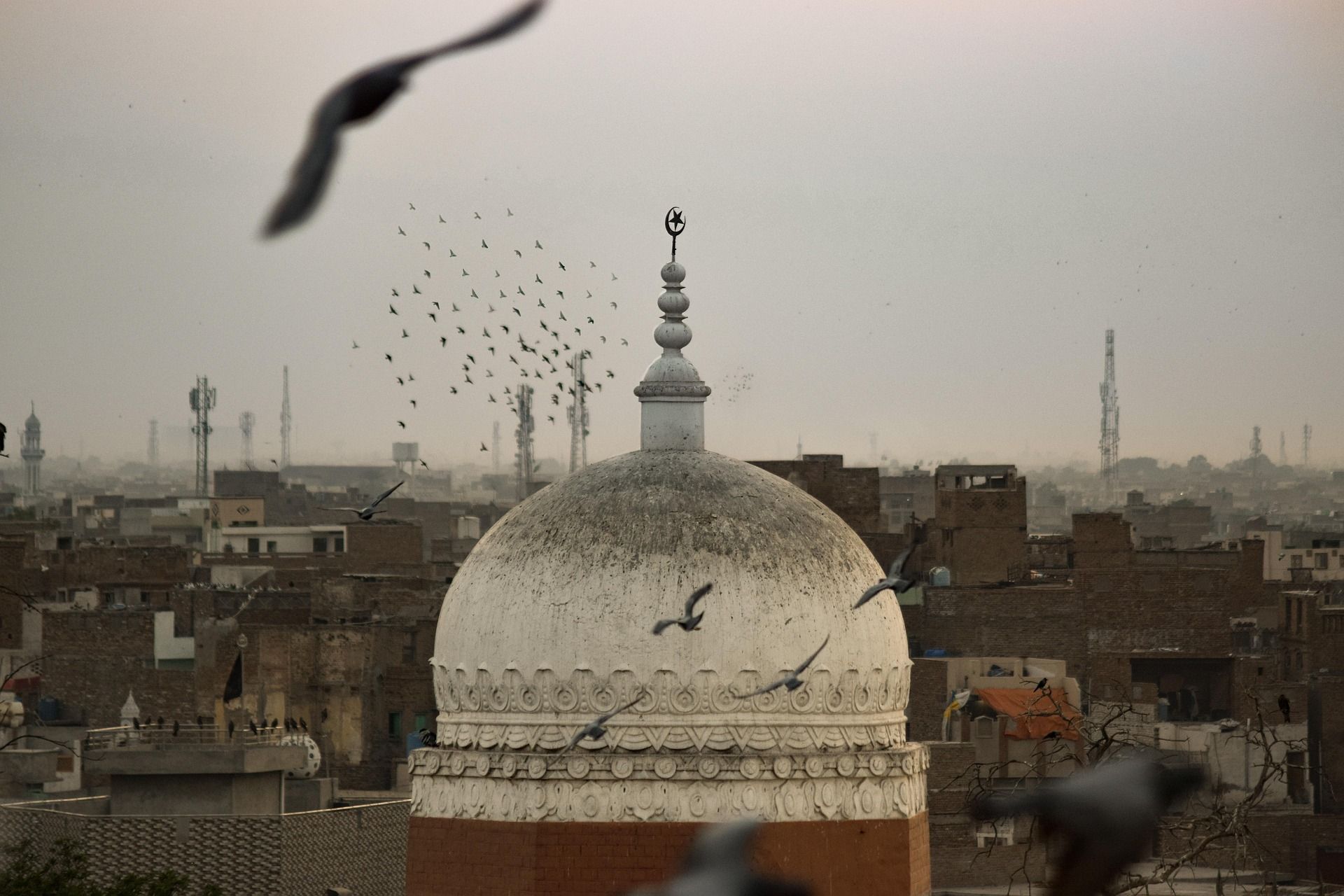
Religion und Gewalt in Syrien
Monographie zum Verhältnis von Staatlichkeit, Gewalt und Religion im Syrien unter der Assad-Dynastie
Christoph Leonhardt,
Lit-Verlag 2024
Assessing the Status of Digital Integration in the MENA-Region
Analyse zum Stand der Digitalisierung bei Klein- und Mittelständischen Unternehmen in der MENA-Region
Manuel Langendorf & Alexander Farley, Wilson-Center 2024

Sources of violence and conflict in an oil rent based economy
Studie zum Zusammenhang von Konflikten in einer öl-basierten Wirtschaft am Beispiel der kurdischen Gebiete im Irak
Silvia Nicola, Routledge 2019
Weitere Publikationen
Ausgewählte Publikationen 2022 - 2025
- Leonhardt, Christoph; Lukas, Stefan: Der Nahe Osten in der Zeitenwende? Israels Krieg gegen die Hamas und seine Folgen, in: Zeitschrift für Außen- und Sicherheitspolitik, Vol. 17, Springer 2024.
- Langendorf, Manuel: How the Middle East could maximise AI's potential, The New Arab, 04.07.2024.
- Leonhardt, Christoph: Widerstandsbewegungen als Erosion staatlicher Macht: PLO, Hamas und Hisbollah, in: Scianna, Bastian/Lukas, Stefan (Hgg.), Der Nahe Osten in einer globalisierten Welt: Entwicklungslinien, Gegensätze, Herausforderungen, Frankfurt/New York 2024, 61–81.
- Haqiqat,Musqa; Leonhardt Christoph: Was der Aufstieg des IS-PK in Afghanistan bedeutet, Zenith, Berlin 2024.
- Raabe, Pauline: Wir lassen einfach Taten sprechen, in: Zenith, 02/2024.
- Langendorf, Manuel: Enhancing US-EU collaboration in MENA's digital development, Middle East Institute, 07.09.2023.
- Leonhardt, Christoph: Die Front im Norden, Zenith, Berlin 2023.
- Langendorf, Manuel, Anwar, Zienab, Colin, Francesco, Marcinkowska, Izabela: The Digital Transition in the EU’s Southern Neighbourhood: Progress, Obstacles and Opportunities, European Institute of the Mediterranean, June 2023.
- Lukas, Stefan: Iraq is running out of water, International Politic and Society (IPS), 26.07.2023.
- Lukas, Stefan; Sons, Sebastian: China, Corona,Climate Change - Three Gamechangers for the Arab Gulf States, CARPO-Report, 11/2023.
- Lukas, Stefan: The Impacts of Climate Change in the Eastern Mediterranean – Approaches for Action by European Actors, in: Environmental Challenges as Catalysts for Regional Conflict and Cooperation in the Eastern Mediterranean, Konrad-Adenauer-Foundation & HMS, Haifa, March 2023, S. 103-112.
- Brendel, Heiko; Bohn, Friedrich; Lukas, Stefan; et al.: Die Energiewende als Beitrag zur Resilienzstärkung und Friedenssicherung in Europa, in: Diskussionsbeiträge der Scientists for Future, Februar 2023.
- Paradies, Marius; Lukas, Stefan: The Middle East’s food crisis spells disaster, in: IPS-Journal, 21.03.2022.
- Lukas, Stefan: Finstere Perspektiven für die europäische Nachbarschaft – Der Nahe Osten im Zeichen von Klimakrise und Ernährungsengpässen, in: Stiftung Energie und Klimaschutz, Karlsruhe 2022.
- Lukas, Stefan; Paradies, Marius: The Middle East’s food crisis spells disaster, in: IPS-Journal, 21.03.2022.
- Lukas, Stefan: Militärische Interventionen als Mittel zur Eindämmung und Bearbeitung innerstaatlicher Konflikte, in: Bundeszentrale für Politische Bildung (BpB), 21.02.2022.
- Carry, Inga; Lukas, Stefan: Auf dem Trockenen – Wie der Klimawandel als Brandbeschleuniger im Iran wirkt, in: Internationale Politik (IP), 1/2022.